
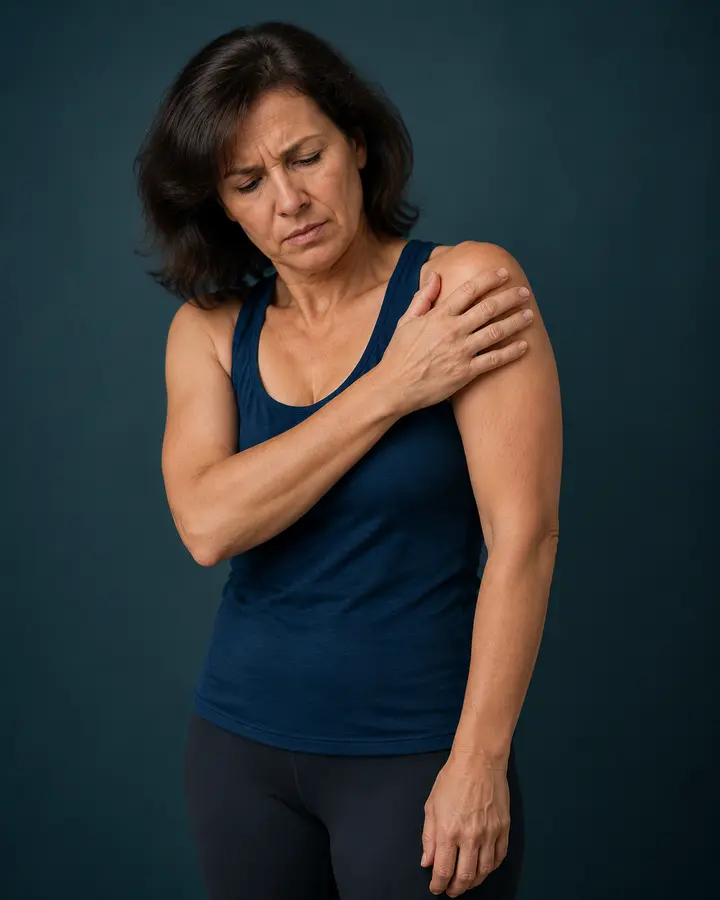
This guide provides general education and does not diagnose a condition or replace individual medical or physiotherapy assessment.
Why shoulder pain can be difficult to label
Shoulder pain may begin after lifting, sport or a fall, or develop gradually without one clear event. Pain with reaching and sleeping on the affected side is common across several shoulder conditions, so the diagnosis should not be based on one symptom alone.
A physiotherapy assessment considers movement, strength, irritability, age, health history and how the problem developed.
Rotator cuff-related shoulder pain
The rotator cuff is a group of muscles and tendons that helps control the shoulder. Symptoms often include pain when lifting the arm, reaching overhead or lying on that side. Movement may be painful, but the shoulder is not usually restricted in every direction.
- Painful reaching or lifting
- Weakness or pain during resisted testing
- Symptoms related to a change in workload, training or activity
- Night pain when lying on the shoulder
Frozen shoulder
Frozen shoulder typically causes a progressive loss of both active and passive movement. Reaching behind the back, rotating the arm outward and lifting overhead can become markedly restricted. It may develop without a clear cause and is more common in people with diabetes.
What rehabilitation may involve
Management depends on the presentation. Rotator cuff rehabilitation commonly uses progressive loading and activity modification. Frozen shoulder care may focus on education, appropriate mobility work, maintaining strength and adapting daily tasks while symptoms settle.
When to seek further assessment
Arrange prompt assessment after significant trauma, sudden major weakness, visible deformity, fever, unexplained swelling or severe unrelenting pain. Medical review or imaging may be appropriate when the examination suggests a fracture, dislocation or another condition requiring investigation.
Official links
Read the source for this topic.
Each link below opens the specific government or scheme page used for this guide.
Raby & Gledswood Hills