
This guide provides general education and does not diagnose a condition or replace individual medical or physiotherapy assessment.
How hamstring strains happen
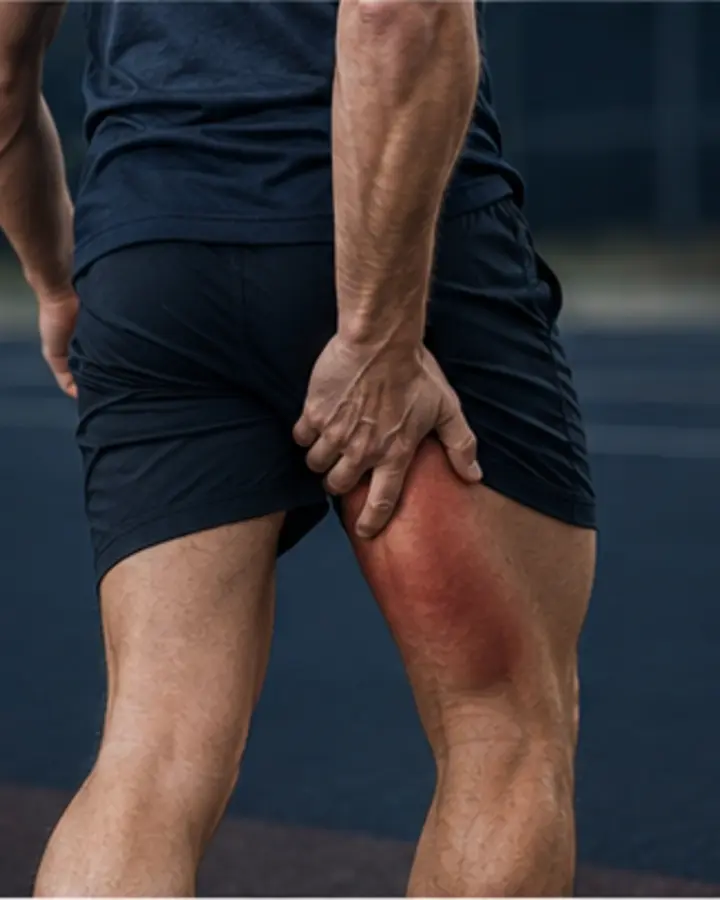
Hamstring strains commonly occur during sprinting, acceleration, kicking or a rapid stretch. Symptoms range from a mild pull to sudden pain that stops activity. Bruising, marked weakness or difficulty walking can suggest a more substantial injury.
The early assessment
- Mechanism and location of pain
- Walking and movement tolerance
- Strength and pain with testing
- Bruising, swelling or a palpable defect
- Previous hamstring injuries
- Whether imaging or medical review is indicated
Rehabilitation stages
Early exercise begins at a tolerable level and progresses towards stronger contractions through a useful range. Later rehabilitation includes hip-dominant and knee-flexion strength, running drills, faster efforts and the movements required by the sport.
Why recurrence is common
Pain can settle before sprint capacity returns. Previous injury, incomplete strength recovery and insufficient exposure to high-speed running can contribute to reinjury. Rehabilitation should prepare the athlete for the actual speed and fatigue demands they will face.
Returning to sport
A graded running plan usually progresses from comfortable jogging to acceleration and near-maximal speed. Strength, sport-specific movement, confidence and response to training help guide readiness rather than relying on a fixed number of days.
Raby & Gledswood Hills