
This guide provides general education and does not diagnose a condition or replace individual medical or physiotherapy assessment.
Understanding Back pain after lifting
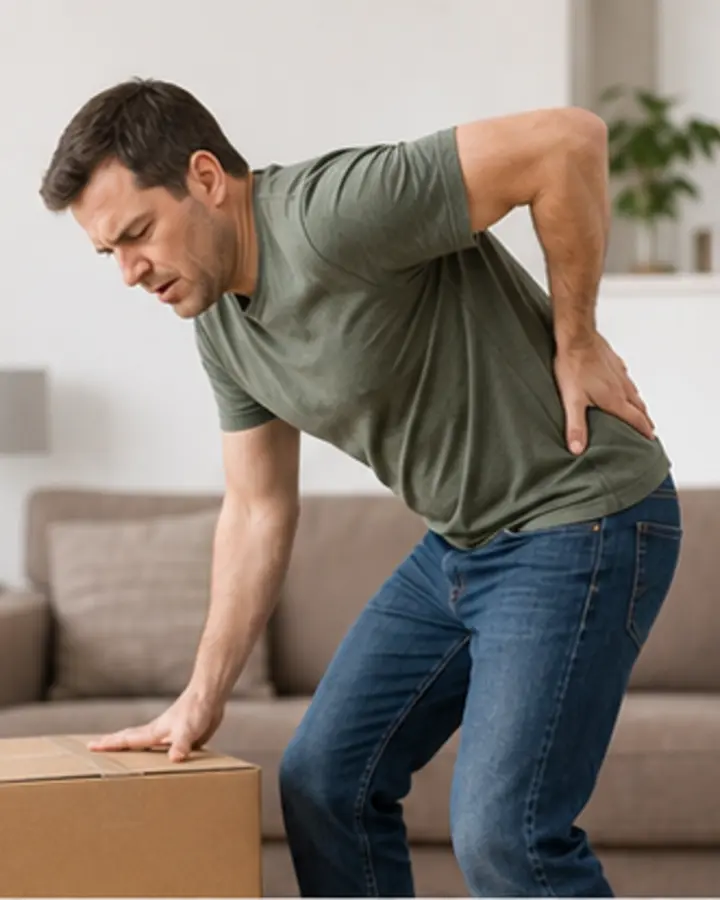
Back pain after lifting can be influenced by joints, discs, muscles, nerves and sensitivity of the pain system. A good assessment looks at the symptom pattern, neurological function and daily demands rather than relying on posture or imaging alone.
The diagnosis describes the starting point, not a complete treatment plan. Severity, irritability, medical history, previous injury and the demands of work or sport all influence rehabilitation.
Symptoms and physiotherapy assessment
Assessment aims to confirm the most likely pain or injury pattern, identify current limitations and decide whether physiotherapy is appropriate or medical investigation is needed.
- Onset, pain pattern and movements that help or aggravate
- Neurological screen when arm or leg symptoms are present
- Movement, strength and functional tolerance
- Warning signs that require medical assessment
Treatment and early management
Early treatment is matched to the examination. It should protect irritable or healing tissue without creating avoidable stiffness, weakness or fear of movement.
- Clear advice and reassurance matched to the presentation
- Comfortable movement and avoidance of prolonged bed rest
- Temporary changes to lifting, sitting or training
- Manual therapy where it supports return to activity
A staged rehabilitation plan
Rehabilitation progresses from settling the current problem to rebuilding the physical qualities the person needs. Exercises are selected and adjusted according to response rather than copied from a one-size-fits-all list.
Later rehabilitation can include walking, trunk and hip strength, repeated bending, carrying, lifting from different heights and a graded return to work, gym or sport.
- Progress spinal, hip and limb strength
- Build walking, sitting and lifting tolerance
- Practise the work, home or gym tasks that matter
- Develop a plan for future flares and continued activity
Returning to work, exercise or sport
Recovery is usually better measured by restored function and confidence than by waiting for every episode of discomfort to disappear.
A useful return plan increases one variable at a time—such as duration, load, speed, range or complexity—then checks the response during the activity and over the following day.
When medical review is important
Urgent review is required for new bladder or bowel dysfunction, saddle numbness, rapidly progressive weakness, severe trauma, fever or significant unexplained illness.
If the diagnosis is uncertain or progress is not following the expected pattern, the plan should be reviewed and referral arranged where appropriate.
Official links
Read the source for this topic.
Each link below opens the specific government or scheme page used for this guide.
Raby & Gledswood Hills