
This guide provides general education and does not diagnose a condition or replace individual medical or physiotherapy assessment.
An ankle sprain can vary considerably
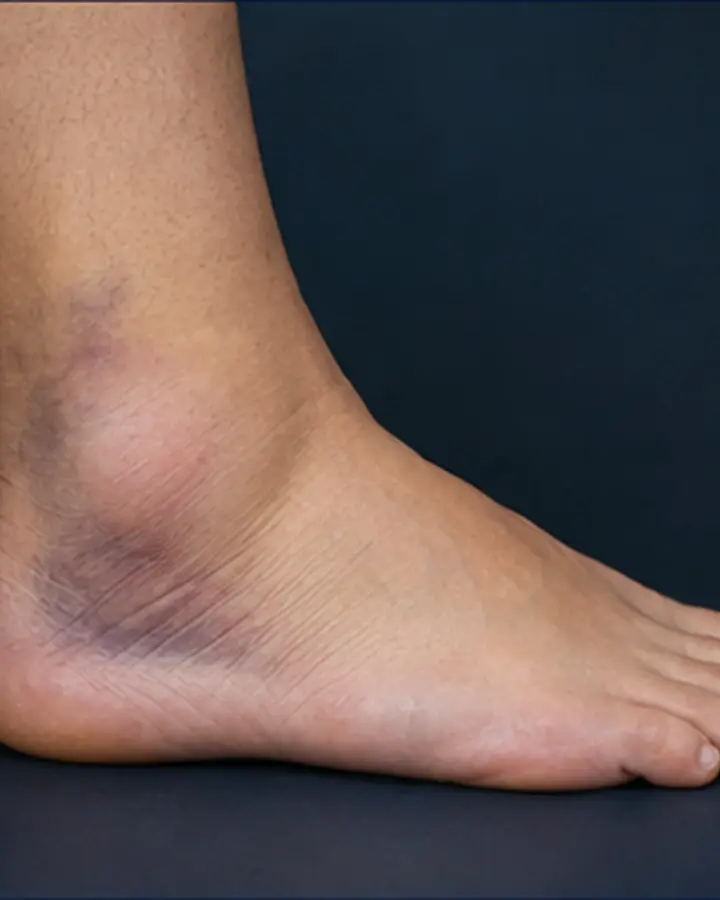
Ankle sprains often involve the ligaments on the outside of the ankle, but the severity and structures involved can differ. Some people can walk soon after injury, while others develop substantial swelling, bruising or difficulty bearing weight.
A history of repeated sprains, tenderness over bone, inability to walk or pain higher above the ankle may affect whether further assessment or imaging is required.
Early management
The early plan aims to protect the injured tissue while maintaining safe movement. Support, activity modification and gradual weight bearing may be used according to the examination. Completely avoiding movement for too long can contribute to stiffness and weakness.
Key parts of ankle rehabilitation
- Restoring ankle movement
- Rebuilding calf and ankle strength
- Balance and proprioception training
- Walking and running progression
- Jumping, landing and change-of-direction drills
- Sport- or work-specific practice
Why repeat sprains happen
Pain and swelling can improve before balance, strength and reaction time have fully recovered. Returning to sport at this point can leave the ankle vulnerable. Rehabilitation should continue until the ankle can tolerate the actual demands of the person’s activity.
A confident return
The final stage may include hopping, acceleration, direction changes and fatigue-based drills. Bracing or taping can be useful in some situations, but it works best alongside—not instead of—a complete rehabilitation program.
Official links
Read the source for this topic.
Each link below opens the specific government or scheme page used for this guide.
Raby & Gledswood Hills